

Some years ago, I was active in volunteer work on behalf of people who stutter. I was especially active during fifteen years, between 1988 and 2003. On rare but consequential occasions, this meant spending up to sixteen hours a day on volunteer work. On even more rare occasions, I would also stay up all night to meet some deadline for a volunteer project. Volunteer work at such a level of intensity is now for me but a distant memory.
In more recent years, I’ve been involved in volunteer work on behalf of fellow residents in Toronto, where I was living with my family until 2018. Such efforts have included, for example, a successful effort to prevent the demolition of a local school, which continues to be in operation. The school is located a one-minute walk from the house where I was living with my wife and daughter, at the time. In 2018, our family moved to Stratford, Ontario, a city west of Toronto. Stratford, home of the Stratford Festival, is a leading Canadian cultural tourism destination. Since about 2020, I’ve largely left volunteer work behind.
Volunteer work on behalf of people who stutter
By way of a brief biography, I’m a retired teacher who worked for school boards in the Greater Toronto Area. As a volunteer, I founded the Stuttering Association of Toronto, in 1988. I formed this group because I wanted to compare notes with other people who stutter. I wanted, in particular, to find out why a disturbing inner voice was bothering me, every time I would be making a fluent presentation to a large audience. That was an era – prior to social media – when self-help groups for people who stutter held in-person meetings where we discussed topics of mutual interest in each other’s physical presence.
I had learned to make such fluent presentations at a three-week speech clinic in Edmonton, Alberta, in July 1987. I had, in turn, learned about the clinic when I happened to come across a newspaper article about it. In that pre-internet era, print newspapers were a leading source for news.
Having learned to come to terms – by comparing notes with other people who stutter – with this bothersome inner voice, I subsequently became involved with volunteer work far beyond Toronto. Drawing upon previous years of experience as an editor and journalist, I was responsible for media relations during the early years of the Canadian Stuttering Association (CSA), which I co-founded at a national conference in Banff, Alberta, in 1991. I’m a co-founder, as well, of the Estonian Stuttering Association (ESA), in 1993, and of the International Stuttering Association (ISA), in 1995.
Pursuit of fluency and acceptance of stuttering
In noting that I have learned to speak fluently at a clinic in Edmonton and have been speaking fluently (with, yes, a few stutters thrown in, here and there) for close to forty years, I want to emphasize, in the very strongest terms, that I do strongly agree that the pursuit of fluency is by no means the only way to go. If I understand this matter correctly, many stuttering self-help associations worldwide along, perhaps, with a sizeable proportion of speech therapists, tend to take a dim view of the pursuit of fluency. I have no quarrel with such a view. Every person must pursue whatever they perceive is best for them.
I’m also aware that a fifth of stutterers who learn fluency as a second language will not be able, for reasons having to do with how our brains are wired for speech production, to retain newly acquired fluency skills after attending a clinic such as I attended. That is a hugely significant proportion. As it happened, I was part of the four out of five stutterers who can benefit, according to the available outcomes research, from relearning how to speak. After I attended a speech clinic in Edmonton in 1987, I spent four years and four months practising my newly acquired fluency skills every day.
This became for me a routine activity, like brewing a cup of coffee every morning. It never felt like a huge effort. I also worked in a systematic way in figuring out how to apply my fluency skills in everyday speaking situations. I would, as well, regularly record things I was saying when talking with people, and would then carefully analyze what I was doing right, and what I could be doing even better.
I mention this to underline that learning fluency as a second language has in my case required a combination of first-rate, individualized instruction, at a clinic in Edmonton, alongside years of daily, conscientious practice until the skills were strongly consolidated. I have chosen to pursue fluency and at the same time I accept that I am a person who stutters.
Styles of organizing
I have a strong interest in community organizing and project management. In my career as a volunteer, I’ve adopted a low-key style of organizing that has worked well for me. Other, more high-profile ways may suit other people just as well. My own capabilities are strong in some areas and limited in others. I have an ability to bring people together in pursuit of shared goals. I also have a capacity to string words together and I know how to build things, in physical and abstract realms. That is the extent of my capabilities. Being aware of my own limitations, I have often called upon people whose skills exceed my own.
For example, in steps leading up to launch of both the CSA and ISA, we called upon Rick Randall, a person who stutters who is professionally trained in design and analysis of surveys. He designed and interpreted our surveys. I myself have no expertise in such a vital method of acquiring information. Prior to launch of the CSA and ISA, we sent out large numbers of surveys to find out if there was sufficient interest, among previously established groups and organizations of stutterers, in proceeding with the launch of each of these new organizations. These well-designed surveys played a central role in early stages of our organizing efforts. We also used professional-quality surveys to get comments and responses from attendees during early CSA national conferences.
Occasionally, when I was starting out on the launch of some organization, someone I’d met recently would share with me an honest assessment of my plans. During a visit to Edmonton from Toronto around 1989, for example, when I was meeting with the Edmonton-based organizers of the national stuttering conference that took place in 1991, I spoke with Einer Boberg, co-founder with Deborah Kully of the speech clinic in Edmonton I attended in 1987.
Einer Boberg said to me, during that conversation around 1989 (and I paraphrase): “Some people can organize a conference; other people don’t have such a capacity. And some people who do a great job of organizing conferences tend to be low key in their style of organizing, as you are; whereas others are the opposite. Either of these approaches can lead to great results.”
I began my international work in the early 1990s
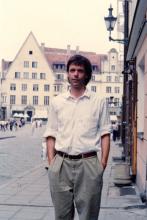
In the early years of the International Fluency Association (IFA, now the World Stuttering and Cluttering Organization: WSCO), I served as chair of an IFA committee which was focused upon the worldwide interests of people who stutter. In that capacity, I established connections, for purposes of information sharing, with national stuttering self-help associations around the world. Eventually it occurred to me, as it occurred to other people who stutter, as well, that it would be a great idea if national associations got together to form an international organization of their own, so they could speak on their own behalf at the international level.
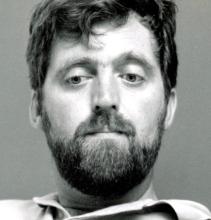
A series of international meetings organized by people who stutter had already been taking place for many years. A co-founder of the CSA, Michael Niven of Canada, had written the minutes for a meeting of attendees at a World Congress of People Who Stutter in San Francisco in 1992. That meeting had spoken of setting up an international organization. I worked with Thomas Krall of Germany in planning for launch of the ISA. The founding of the association took place in 1995, on the occasion of a World Congress meeting in that year in Linköping, Sweden.
The new Canadian national organization was originally called the Canadian Association for People Who Stutter (CAPS) when launched in 1991. Over the years, I became convinced that a shorter name would be more effective in attracting media attention. For that reason, I suggested to the association’s board of directors that a shorter name, the Canadian Stuttering Association (CSA), would work better. The board agreed and proceeded with the change of name.
Mart Kangur decided after the lectures that he would attend university
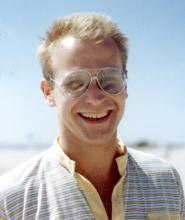
I will close with a story about my two trips to Estonia in the summers of 1989 and 1990. I travelled across this Baltic state during each of these visits. I originally went to Estonia to engage in volunteer work on behalf of the Estonian Heritage Society. In that capacity, in 1989, I helped to restore a historic manor building. A member of the latter heritage society, Ülo Lomp, arranged at that time for me to be interviewed by an Estonian magazine. In the interview, I mentioned that people who stutter, no matter which country they may live in, have a lot to learn from each other.

At this point Andres Loorand of Estonia enters the story. He read the magazine article and arranged for me to deliver a series of lectures in Tallinn, Estonia, in the summer of 1990, about Western approaches to dealing with stuttering. The lectures, delivered in Estonian, my first language, were well received. As an outcome of subsequent exchanges of information, the Estonian Stuttering Association was launched in 1993.
Fast forward to 2018. Andres Loorand invited me to make a presentation in Tallinn at a Nordic Seminar, a symposium for people who stutter from across Scandinavia.
During my visit to Tallinn, I met Mart Kangur, who was a high school student when he attended my talks in Tallinn in 1990. Mart informed me of something that quite surprised me. He said that after my talks, he had chosen to go on to university. Until he heard me speak, he said, he had decided that, as a person who stutters, there would be no point in going to university.

I was also pleased to learn that Mart Kangur is now a well-established Estonian poet. I now have three volumes of his published work. My command of written Estonian is quite rudimentary. With the aid of an Estonian-English dictionary, I am now working at increasing my command of the Estonian language, by reading Mart’s volumes of poetry. It is a moving and highly enriching experience to read his work. We owe many thanks to a great many people, who worked together in one way or another, who enabled Mart Kangur to decide to continue with his education.
We have much to learn from each other. The work we are all doing together, each of us contributing in our own way, no matter what language we may be speaking, and no matter where we may be living, has tremendous value.
Many thanks to Dieudonné Nsabimana, Editorial Team Member of One Voice, who invited me to write about my memories of how the ISA was founded, and to May Jolliffe, whose feedback regarding early drafts has been highly valuable and much appreciated.
Jaan Pill is a retired elementary teacher who worked in schools across the Greater Toronto Area. As a young person, he stuttered severely; he frequently encountered speaking situations where he could not get out any words at all. In time, with the aid of a speech clinic in Edmonton, he acquired – and learned to consistently apply, no matter what the occasion - a set of fluency skills that have worked well for him now for close to forty years. Now living with his wife and daughter in Stratford, Ontario, he has previously lived in Toronto, Vancouver, and Montreal. He was born in Stockholm, Sweden, just after the Second World War; his parents and older brother had crossed the Baltic Sea to Sweden from Estonia as refugees in September 1944.
All photos supplied by Jaan Pill