Stuttering and Serendipity

Author
Lisa Wilder

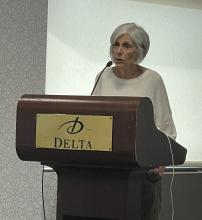
Photo: Tony Intas, Rosalee Shenker and Lisa Wilder

I have been lucky enough to live in different parts of Canada in my life, and in the 1990s I moved to Vancouver, BC to attend college. While there, I got involved in the British Columbia Association of People Who Stutter (BCAPS), a provincial entity that assisted people who stutter with public advocacy, support groups, and funding for speech therapy.

💚 Light Up Canada for International Stuttering Awareness Day, October 22, 2026

This International Stuttering Awareness Day, Canada will be shining in sea-foam green in recognition of the millions of people around the world who stutter — and to celebrate acceptance, understanding, and the voices of Canadians who stutter. We’re excited to share that the following landmarks will be illuminated in green on October 22 as part of ISAD 2026:

📍 St. John’s, Newfoundland and Labrador
• City of St. John’s City Hall

Five Seconds That Mean a Lifetime to Me

Author
Justyna Majewska

I don’t remember the day I started stuttering.


But I remember an entire life shaped by it.


I don’t remember every word I struggled to say.


But I remember the people who couldn’t wait for me to finish.


For almost forty years, I believed that stuttering was the greatest problem in my life. I thought that if I spoke fluently, I would be braver and more confident. That finding a job would be easier. That I would speak up more often, meet more people, and pursue my dreams.


Fluency & Acceptance: The Battle Within the Community

Author
Tom Lovett

Just as each person's stutter may be different, PWS vary in how they relate to their stutter: how much they value fluency, how they want to be perceived by others, and the kind of treatment will most help them achieve their goals. While each person is unique, the ways in which people cope with a stutter falls on a spectrum between two philosophical poles: fluency, and freedom from fluency.