
I don’t remember the day I started stuttering.
But I remember an entire life shaped by it.
I don’t remember every word I struggled to say.
But I remember the people who couldn’t wait for me to finish.
For almost forty years, I believed that stuttering was the greatest problem in my life. I thought that if I spoke fluently, I would be braver and more confident. That finding a job would be easier. That I would speak up more often, meet more people, and pursue my dreams.
All my life, I tried to fix myself.
Today, I know that I wasn’t the one who needed to change the most.
What needed to change was people’s awareness.
Most of us know how to behave around a blind person. We know not to take away their cane or lead them somewhere without asking. We know that a wheelchair user does not need someone to push their chair without permission.
And yet, when it comes to people who stutter, we do something very similar.
We finish their sentences.
We correct them.
We rush them.
We say, “Calm down. Take a breath.”
Or we smile awkwardly, as if we were witnessing something embarrassing.
Do you know what is most ironic about all this?
Most people do it with the best of intentions.
They genuinely believe they are helping.
But it is a little like taking a paintbrush from an artist’s hand and saying, “Let me do it. It’ll be quicker.”
Or taking the bow away from a violinist because the concert is lasting a little too long.
No one likes having their chance to finish their own thought taken away from them.
Neither does a person who stutters.
I don’t need anyone to speak for me.
I just need a few seconds.
That’s all.
Five seconds of patience.
Five seconds of silence.
Five seconds of respect.
It really isn’t much.
But what hurts the most is something else.
Over the years, I began to believe that because I spoke differently, perhaps I should speak less.
I started withdrawing from conversations.
Not because I had nothing to say.
Quite the opposite.
I had too much to say.
I was simply afraid that before I managed to finish my first sentence, someone would already have judged me.
And they did.
Because in our world, fluent speech is often mistaken for intelligence.
A quick response for competence.
A confident voice for a confident person.
That is a terrible mistake.
Stuttering does not take away a person’s knowledge.
It does not take away their sense of humour.
It does not take away their dreams.
It does not take away their empathy.
It does not take away their talent.
It takes away something far worse.
It takes away the courage to show the world who you truly are.
Only recently did I understand that, for most of my life, I was not afraid of speaking.
I was afraid of people’s reactions.
Those are two completely different things.
Today, I still stutter.
And do you know what?
I am no longer ashamed of it.
Because I have discovered that my voice is not worth less simply because it needs a little more time.
I do not have to speak perfectly to speak wisely.
I do not have to speak quickly to speak truthfully.
So I would like to ask for just one thing.
Do not feel sorry for us.
Do not pity us.
Do not treat us like heroes.
Just let us finish our sentences.
Do not finish them for us.
Do not guess.
Do not rush us.
Wait.
Maybe five seconds.
Maybe ten.
To you, it is only a moment.
But to someone who has spent their whole life afraid to speak, it may be the moment they finally feel truly heard.
Because the greatest obstacle in my life was never stuttering.
The greatest obstacle was the world’s impatience.
And the world truly will not fall apart if, for just a few seconds, it simply… waits.
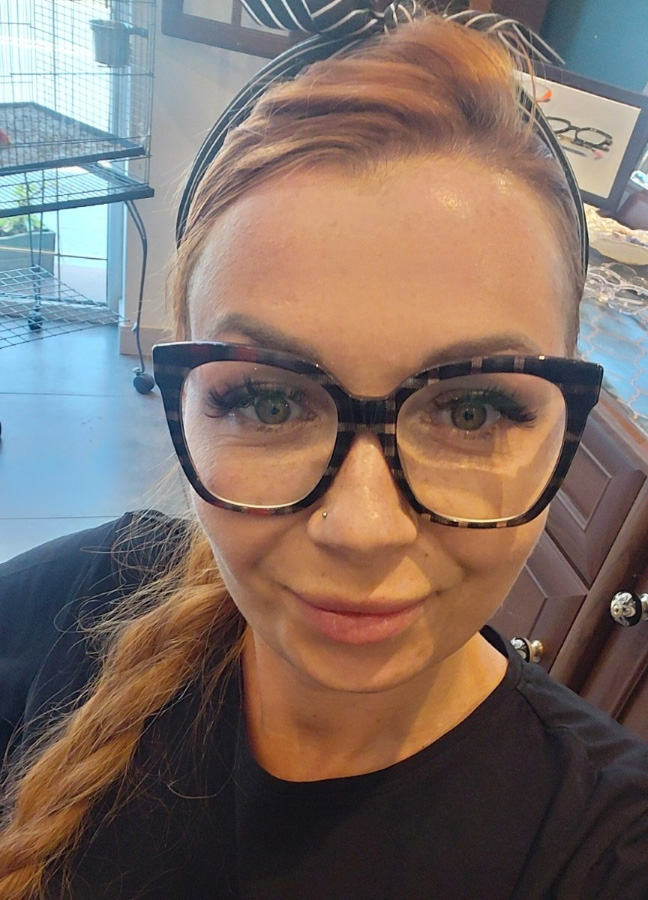
Justyna Majewska was born in the late 80's, and lives in Siewierz, Poland. She is a cook by profession and writes about important social issues based on her own experiences. She experienced stuttering for most of her life and now speaks much more fluently, although those experiences remain an important part of her story. In her writing, she explores what often goes unheard: the tension before speaking, the fear of other people’s reactions, and the consequences of judging someone by the way they speak. She is also the creator of a social awareness initiative focused on people who stutter. Her goal is to raise public awareness and show that every person who stutters may have different needs. She believes that the most important things we can offer are attention, patience, respect, and a willingness to ask rather than assume what kind of support another person needs.