
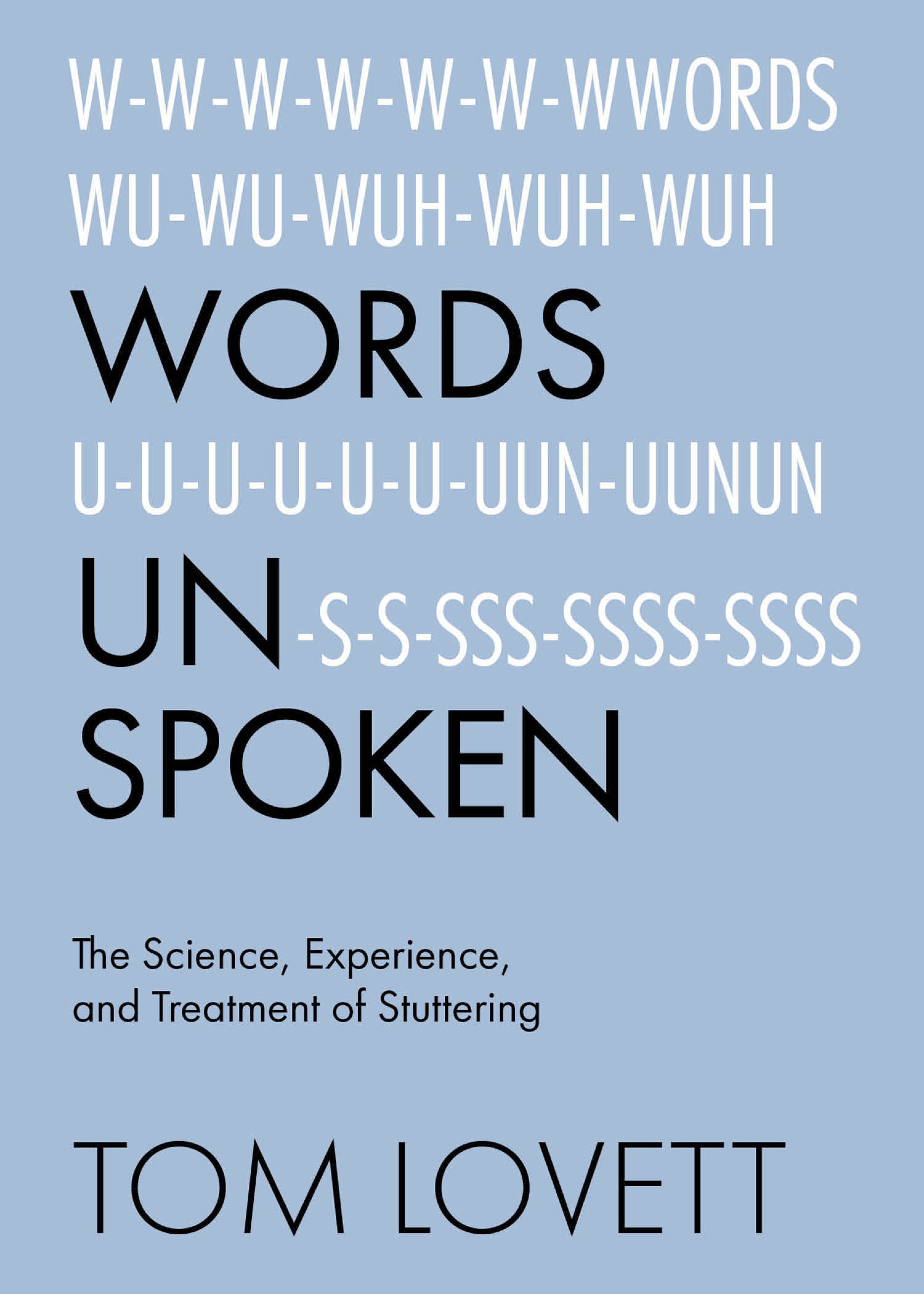

I got to hear Mr. Lovett speak at a recent event hosted by the World Stuttering Network and he was kind enough to send me a copy of his book which has a twin focus of (a) his personal experience as a person who stutters, and (b) his overview of some of the ongoing research into this topic.
Tom Lovett is a PWS, software engineer, and former Coast Guard machinery technician. He has read over 240 research articles, attended five academic conferences on stuttering, and will be pursuing a PhD in Communication Sciences and Disorders starting in the Fall of 2027.
As a scientist myself (though in a very different field), I always appreciate a good literature review and Mr. Lovett is up-front in that this is not his field of specialty either. Medical research into stuttering has been a difficult field due to lack of funding and the ongoing belief in some circles that “it’s just in our heads”. Well it is actually in our heads, but not because we are somehow mentally deficient but rather because of clearly visible neurological differences in the brains of people who stutter and those who do not.
That message is important for everyone to hear. Stuttering is a physiological condition and can be addressed as such. Mr. Lovett makes the point that even among the stuttering community there is not widespread knowledge of the current state of research.
Mr. Lovett also writes very eloquently about his own personal experiences: the dark places that people can enter due to feelings of hopelessness and isolation and how wonderfully freeing it can be to attend a large conference where you are, all of a sudden, in the majority for that period of time. I vividly remember entering speech therapy in my mid 20s and all of a sudden hearing audible proof that it “is not just me”, which led me to joining support groups, attending conferences and discovering a whole new family out there.
Mr. Lovett dedicates much of his book to stuttering “management”. Because stuttering that persists past a certain age is almost certainly never going to be cured, stuttering has to be accommodated and lived with as best as possible. Management is not one size fits all. Some people achieve it via speech therapy, others by “personal tricks”, and some like me, learn how to proudly wear it on my sleeve.
The ending statement in his book strikes a chord with me: what would his life have been like if he didn’t stutter? His answer is (to paraphrase) “...not necessarily better, not necessarily worse, but different”. That is true: I can’t imagine myself without my stuttering and life as a fluent person would be different, but I somehow doubt, better.

Reviewer Catherine Moroney has stuttered all of her life and fully expects to continue to do so. She’s been active in the stuttering community (both in Canada and the US) for over 20 years and loves going to conferences to stay up and drink and talk all night long where there’s no worry about when that next block is going to strike and spoil the punchline. In her professional life, she’s a physicist and software engineer and has worked for NASA on analyzing satellite data. She grew up and went to school in Montreal and Toronto and despite living in the US for many years, considers Canada to be home although she refuses to be dragged into a Montreal vs. Toronto flame-war!